AI Grammar Checker Online Free

AI Grammar Checker Online Free — independent reviews, comparisons, pricing and step-by-step guides on Aizhi.

  • Taskworld

    Taskworld

    Taskworld is a cloud-based collaboration platform created by Fred Mouawad. The SaaS (software as a service) is designed to facilitate project and task management, collaboration, delegation, communication, knowledge management, measure progress and provide performance metrics for evidence-based evaluations within teams. It allows team members to assign and receive tasks, add followers, record comments, share and store unlimited files and organize projects. == Background == An initial version of Taskworld was custom-built by the IT team working for Mouawad in 2006. This was done as a way to try and overcome internal issues regarding delegation, accountability and time-management. The application was constructed to prevent tasks from falling through the cracks and make it easy to follow up on-going projects where many individuals throughout various departments of the organization were involved. Mouawad’s Synergia One group of companies later implemented the application internally as the ‘Task Management System’ and found a general improvement in execution across international offices and departments. This successful implementation led Mouawad to found the ‘My Taskworld’ website which later evolved into ‘Taskworld.' The company was officially founded in February 2012, and in June later that year, Mouawad presented a prototype of the Taskworld website to an Executive Program at the Stanford Graduate School of Business. == Reception == The launch of the app was covered by the media as an addition to the Synergia One group of companies founded by CEO Fred Mouawad. The mobile app is currently available on both android and iOS platforms. Google Play gives the app 3.8 out of 5 stars while the Apple App Store gave it 2.9 out of 5 stars. Alex Williams in a 2014 article for Tech Crunch said, “Taskworld’s technology plays to human emotions. As the feedback is continuous, people are compelled to engage with the service. But in some respects, Taskworld is fairly simple and still needing more to make it a potent competitor in the market.” == Features == Taskworld's main features include, but are not limited to: Project &Task Management - Taskworld includes up to five levels of hierarchy including Project Group, Project, Tasklist, Task and Checklist. Some features in this group are assigning tasks, setting due dates, adding followers, task comments, set repeating tasks, tasks in multiple locations, project templates, copy project, archiving, smart notifications, drag and drop Kanban boards, image preview boards, file management, people page and personnel directory, customizable tags and colored labels. Enterprise Messaging - The app includes a native chat application with channels and groups, private and direct messaging capabilities. Other communication features inside of the app include project chat, drag and drop file attachments, an email bridge to send and receive messages and @mentions. Overview & Analytics - Taskworld includes several features under this section including a dashboard, workspace snapshot, workspace filter, interactive calendar, project analytics and health status, project burndown chart, project burn-up chart and interactive timeline. == Languages and customers == Taskworld is used by 4,000 companies in 80 countries. The app is currently available in eight languages: English, French, German, Spanish, Mandarin, Portuguese, Thai and Korean. == Customer support == The Taskworld User Guide offers details on how to use features of the application. Customer support is offered inside of the application for questions and feedback regarding the software, and also via email. The Taskworld customer support team has received a 98% Customer Satisfaction Rating, according to customer ratings on its support platform Zendesk. Free, live demos are also offered for those companies who need assistance.

    Read more →
  • Optimal discriminant analysis and classification tree analysis

    Optimal discriminant analysis and classification tree analysis

    Optimal Discriminant Analysis (ODA) and the related classification tree analysis (CTA) are exact statistical methods that maximize predictive accuracy. For any specific sample and exploratory or confirmatory hypothesis, optimal discriminant analysis (ODA) identifies the statistical model that yields maximum predictive accuracy, assesses the exact Type I error rate, and evaluates potential cross-generalizability. Optimal discriminant analysis may be applied to > 0 dimensions, with the one-dimensional case being referred to as UniODA and the multidimensional case being referred to as MultiODA. Optimal discriminant analysis is an alternative to ANOVA (analysis of variance) and regression analysis.

    Read more →
  • Stress majorization

    Stress majorization

    Stress majorization is an optimization strategy used in multidimensional scaling (MDS) where, for a set of n {\displaystyle n} m {\displaystyle m} -dimensional data items, a configuration X {\displaystyle X} of n {\displaystyle n} points in r {\displaystyle r} ( ≪ m ) {\displaystyle (\ll m)} -dimensional space is sought that minimizes the so-called stress function σ ( X ) {\displaystyle \sigma (X)} . Usually r {\displaystyle r} is 2 {\displaystyle 2} or 3 {\displaystyle 3} , i.e. the ( n × r ) {\displaystyle (n\times r)} matrix X {\displaystyle X} lists points in 2 − {\displaystyle 2-} or 3 − {\displaystyle 3-} dimensional Euclidean space so that the result may be visualised (i.e. an MDS plot). The function σ {\displaystyle \sigma } is a cost or loss function that measures the squared differences between ideal ( m {\displaystyle m} -dimensional) distances and actual distances in r-dimensional space. It is defined as: σ ( X ) = ∑ i < j ≤ n w i j ( d i j ( X ) − δ i j ) 2 {\displaystyle \sigma (X)=\sum _{i Read more →

  • L-1 Identity Solutions

    L-1 Identity Solutions

    L-1 Identity Solutions, Inc. was an American biometric technology company headquartered in Stamford, Connecticut, specializing in identity management products and services including facial recognition systems, fingerprint readers, and secure credentialing solutions for governments and commercial enterprises. The company's shares traded on the New York Stock Exchange under the ticker symbol "ID." == History == L-1 Identity Solutions was formed on August 29, 2006, from a merger of Viisage Technology, Inc. and Identix Incorporated. Prior to the Safran acquisition, L-1 divested its Intelligence Services Group (ISG) comprising SpecTal LLC, Advanced Concepts Inc., and McClendon LLC to BAE Systems, Inc. for approximately $297 million. The transaction, initially announced in September 2010, closed on February 15, 2011, with more than 1,000 ISG employees joining BAE Systems' Intelligence & Security sector. It specializes in selling face recognition systems, electronic passports, such as Fly Clear, and other biometric technology to governments such as the United States and Saudi Arabia. It also licenses technology to other companies internationally, including China. On July 26, 2011, Safran (NYSE Euronext Paris: SAF) acquired L-1 Identity Solutions, Inc. for a total cash amount of USD 1.09 billion. L-1 was part of Morpho's MorphoTrust department which rebranded to Idemia in 2017. Bioscrypt is a biometrics research, development and manufacturing company purchased by L-1 Identity Solutions. It provides fingerprint IP readers for physical access control systems, Facial recognition system readers for contactless access control authentication and OEM fingerprint modules for embedded applications. According to IMS Research, Bioscrypt has been the world market leader in biometric access control for enterprises (since 2006) with a worldwide market share of over 13%. In 2011, Bioscrypt was sold to Safran Morpho.

    Read more →
  • Google Vids

    Google Vids

    Google Vids (not to be confused with Google Video) is an online timeline-based video editing application included as part of the Google Workspace suite. It is designed to help users create informational videos for work-related purposes. The app uses Google's Gemini technology to enable users to create video storyboards manually or with AI assistance using simple prompts. Features include uploading media, choosing stock videos, images, background music, and a voiceover feature with script generation using AI. The app is currently in testing with select Google Workspace Labs users. Like Kapwing and Capcut, Google Vids is primarily for creating work-related content like sales training, onboarding videos, vendor outreach, and project updates. It offers various styles and templates, collaborative features, and is not limited to videos without the short integration at the moment. Google Vids was announced on April 9, 2024. In September 2025, Google began to roll out a basic version of the application to Google Workspace users.

    Read more →
  • Relationship square

    Relationship square

    In statistics, the relationship square is a graphical representation for use in the factorial analysis of a table individuals x variables. This representation completes classical representations provided by principal component analysis (PCA) or multiple correspondence analysis (MCA), namely those of individuals, of quantitative variables (correlation circle) and of the categories of qualitative variables (at the centroid of the individuals who possess them). It is especially important in factor analysis of mixed data (FAMD) and in multiple factor analysis (MFA). == Definition of relationship square in the MCA frame == The first interest of the relationship square is to represent the variables themselves, not their categories, which is all the more valuable as there are many variables. For this, we calculate for each qualitative variable j {\displaystyle j} and each factor F s {\displaystyle F_{s}} ( F s {\displaystyle F_{s}} , rank s {\displaystyle s} factor, is the vector of coordinates of the individuals along the axis of rank s {\displaystyle s} ; in PCA, F s {\displaystyle F_{s}} is called principal component of rank s {\displaystyle s} ), the square of the correlation ratio between the F s {\displaystyle F_{s}} and the variable j {\displaystyle j} , usually denoted : η 2 ( j , F s ) {\displaystyle \eta ^{2}(j,F_{s})} Thus, to each factorial plane, we can associate a representation of qualitative variables themselves. Their coordinates being between 0 and 1, the variables appear in the square having as vertices the points (0,0), ( 0,1), (1,0) and (1,1). == Example in MCA == Six individuals ( i 1 , … , i 6 ) {\displaystyle i_{1},\ldots ,i_{6})} are described by three variables ( q 1 , q 2 , q 3 ) {\displaystyle (q_{1},q_{2},q_{3})} having respectively 3, 2 and 3 categories. Example : the individual i 1 {\displaystyle i_{1}} possesses the category a {\displaystyle a} of q 1 {\displaystyle q_{1}} , d {\displaystyle d} of q 2 {\displaystyle q_{2}} and f {\displaystyle f} of q 3 {\displaystyle q_{3}} . Applied to these data, the MCA function included in the R Package FactoMineR provides to the classical graph in Figure 1. The relationship square (Figure 2) makes easier the reading of the classic factorial plane. It indicates that: The first factor is related to the three variables but especially q 3 {\displaystyle q_{3}} (which have a very high coordinate along the first axis) and then q 2 {\displaystyle q_{2}} . The second factor is related only to q 1 {\displaystyle q_{1}} and q 3 {\displaystyle q_{3}} (and not to q 2 {\displaystyle q_{2}} which has a coordinate along axis 2 equal to 0) and that in a strong and equal manner. All this is visible on the classic graphic but not so clearly. The role of the relationship square is first to assist in reading a conventional graphic. This is precious when the variables are numerous and possess numerous coordinates. == Extensions == This representation may be supplemented with those of quantitative variables, the coordinates of the latter being the square of correlation coefficients (and not of correlation ratios). Thus, the second advantage of the relationship square lies in the ability to represent simultaneously quantitative and qualitative variables. The relationship square can be constructed from any factorial analysis of a table individuals x variables. In particular, it is (or should be) used systematically: in multiple correspondences analysis (MCA); in principal components analysis (PCA) when there are many supplementary variables; in factor analysis of mixed data (FAMD). An extension of this graphic to groups of variables (how to represent a group of variables by a single point ?) is used in Multiple Factor Analysis (MFA) == History == The idea of representing the qualitative variables themselves by a point (and not the categories) is due to Brigitte Escofier. The graphic as it is used now has been introduced by Brigitte Escofier and Jérôme Pagès in the framework of multiple factor analysis == Conclusion == In MCA, the relationship square provides a synthetic view of the connections between mixed variables, all the more valuable as there are many variables having many categories. This representation iscan be useful in any factorial analysis when there are numerous mixed variables, active and/or supplementary.

    Read more →
  • Multi-label classification

    Multi-label classification

    In machine learning, multi-label classification or multi-output classification is a variant of the classification problem where multiple nonexclusive labels may be assigned to each instance. Multi-label classification is a generalization of multiclass classification, which is the single-label problem of categorizing instances into precisely one of several (greater than or equal to two) classes. In the multi-label problem the labels are nonexclusive and there is no constraint on how many of the classes the instance can be assigned to. The formulation of multi-label learning was first introduced by Shen et al. in the context of Semantic Scene Classification, and later gained popularity across various areas of machine learning. Formally, multi-label classification is the problem of finding a model that maps inputs x to binary vectors y; that is, it assigns a value of 0 or 1 for each element (label) in y. == Problem transformation methods == Several problem transformation methods exist for multi-label classification, and can be roughly broken down into: === Transformation into binary classification problems === The baseline approach, called the binary relevance method, amounts to independently training one binary classifier for each label. Given an unseen sample, the combined model then predicts all labels for this sample for which the respective classifiers predict a positive result. Although this method of dividing the task into multiple binary tasks may resemble superficially the one-vs.-all (OvA) and one-vs.-rest (OvR) methods for multiclass classification, it is essentially different from both, because a single classifier under binary relevance deals with a single label, without any regard to other labels whatsoever. A classifier chain is an alternative method for transforming a multi-label classification problem into several binary classification problems. It differs from binary relevance in that labels are predicted sequentially, and the output of all previous classifiers (i.e. positive or negative for a particular label) are input as features to subsequent classifiers. Classifier chains have been applied, for instance, in HIV drug resistance prediction. Bayesian network has also been applied to optimally order classifiers in Classifier chains. In case of transforming the problem to multiple binary classifications, the likelihood function reads L = ∏ i = 1 n ( ∏ k ( ∏ j k ( p k , j k ( x i ) δ y i , k , j k ) ) ) {\displaystyle L=\prod _{i=1}^{n}(\prod _{k}(\prod _{j_{k}}(p_{k,j_{k}}(x_{i})^{\delta _{y_{i,k},j_{k}}})))} where index i {\displaystyle i} runs over the samples, index k {\displaystyle k} runs over the labels, j k {\displaystyle j_{k}} indicates the binary outcomes 0 or 1, δ a , b {\displaystyle \delta _{a,b}} indicates the Kronecker delta, y i , k ∈ 0 , 1 {\displaystyle y_{i,k}\in {0,1}} indicates the multiple hot encoded labels of sample i {\displaystyle i} . === Transformation into multi-class classification problem === The label powerset (LP) transformation creates one binary classifier for every label combination present in the training set. For example, if possible labels for an example were A, B, and C, the label powerset representation of this problem is a multi-class classification problem with the classes [0 0 0], [1 0 0], [0 1 0], [0 0 1], [1 1 0], [1 0 1], [0 1 1], and [1 1 1] where for example [1 0 1] denotes an example where labels A and C are present and label B is absent. === Ensemble methods === A set of multi-class classifiers can be used to create a multi-label ensemble classifier. For a given example, each classifier outputs a single class (corresponding to a single label in the multi-label problem). These predictions are then combined by an ensemble method, usually a voting scheme where every class that receives a requisite percentage of votes from individual classifiers (often referred to as the discrimination threshold) is predicted as a present label in the multi-label output. However, more complex ensemble methods exist, such as committee machines. Another variation is the random k-labelsets (RAKEL) algorithm, which uses multiple LP classifiers, each trained on a random subset of the actual labels; label prediction is then carried out by a voting scheme. A set of multi-label classifiers can be used in a similar way to create a multi-label ensemble classifier. In this case, each classifier votes once for each label it predicts rather than for a single label. == Adapted algorithms == Some classification algorithms/models have been adapted to the multi-label task, without requiring problem transformations. Examples of these including for multi-label data are k-nearest neighbors: the ML-kNN algorithm extends the k-NN classifier to multi-label data. decision trees: "Clare" is an adapted C4.5 algorithm for multi-label classification; the modification involves the entropy calculations. MMC, MMDT, and SSC refined MMDT, can classify multi-labeled data based on multi-valued attributes without transforming the attributes into single-values. They are also named multi-valued and multi-labeled decision tree classification methods. kernel methods for vector output neural networks: BP-MLL is an adaptation of the popular back-propagation algorithm for multi-label learning. == Learning paradigms == Based on learning paradigms, the existing multi-label classification techniques can be classified into batch learning and online machine learning. Batch learning algorithms require all the data samples to be available beforehand. It trains the model using the entire training data and then predicts the test sample using the found relationship. The online learning algorithms, on the other hand, incrementally build their models in sequential iterations. In iteration t, an online algorithm receives a sample, xt and predicts its label(s) ŷt using the current model; the algorithm then receives yt, the true label(s) of xt and updates its model based on the sample-label pair: (xt, yt). == Multi-label stream classification == Data streams are possibly infinite sequences of data that continuously and rapidly grow over time. Multi-label stream classification (MLSC) is the version of multi-label classification task that takes place in data streams. It is sometimes also called online multi-label classification. The difficulties of multi-label classification (exponential number of possible label sets, capturing dependencies between labels) are combined with difficulties of data streams (time and memory constraints, addressing infinite stream with finite means, concept drifts). Many MLSC methods resort to ensemble methods in order to increase their predictive performance and deal with concept drifts. Below are the most widely used ensemble methods in the literature: Online Bagging (OzaBagging)-based methods: Observing the probability of having K many of a certain data point in a bootstrap sample is approximately Poisson(1) for big datasets, each incoming data instance in a data stream can be weighted proportional to Poisson(1) distribution to mimic bootstrapping in an online setting. This is called Online Bagging (OzaBagging). Many multi-label methods that use Online Bagging are proposed in the literature, each of which utilizes different problem transformation methods. EBR, ECC, EPS, EBRT, EBMT, ML-Random Rules are examples of such methods. ADWIN Bagging-based methods: Online Bagging methods for MLSC are sometimes combined with explicit concept drift detection mechanisms such as ADWIN (Adaptive Window). ADWIN keeps a variable-sized window to detect changes in the distribution of the data, and improves the ensemble by resetting the components that perform poorly when there is a drift in the incoming data. Generally, the letter 'a' is used as a subscript in the name of such ensembles to indicate the usage of ADWIN change detector. EaBR, EaCC, EaHTPS are examples of such multi-label ensembles. GOOWE-ML-based methods: Interpreting the relevance scores of each component of the ensemble as vectors in the label space and solving a least squares problem at the end of each batch, Geometrically-Optimum Online-Weighted Ensemble for Multi-label Classification (GOOWE-ML) is proposed. The ensemble tries to minimize the distance between the weighted prediction of its components and the ground truth vector for each instance over a batch. Unlike Online Bagging and ADWIN Bagging, GOOWE-ML utilizes a weighted voting scheme where better performing components of the ensemble are given more weight. The GOOWE-ML ensemble grows over time, and the lowest weight component is replaced by a new component when it is full at the end of a batch. GOBR, GOCC, GOPS, GORT are the proposed GOOWE-ML-based multi-label ensembles. Multiple Windows : Here, BR models that use a sliding window are replaced with two windows for each label, one for relevant and one for non-relevant examples. Instances are oversampled or undersampled according to a load factor that is kept

    Read more →
  • Elastic net regularization

    Elastic net regularization

    In statistics and, in particular, in the fitting of linear or logistic regression models, the elastic net is a regularized regression method that linearly combines the L1 and L2 penalties of the lasso and ridge methods. Nevertheless, elastic net regularization is typically more accurate than both methods with regard to reconstruction. == Specification == The elastic net method overcomes the limitations of the LASSO (least absolute shrinkage and selection operator) method which uses a penalty function based on ‖ β ‖ 1 = ∑ j = 1 p | β j | . {\displaystyle \|\beta \|_{1}=\textstyle \sum _{j=1}^{p}|\beta _{j}|.} Use of this penalty function has several limitations. For example, in the "large p, small n" case (high-dimensional data with few examples), the LASSO selects at most n variables before it saturates. Also if there is a group of highly correlated variables, then the LASSO tends to select one variable from a group and ignore the others. To overcome these limitations, the elastic net adds a quadratic part ( ‖ β ‖ 2 {\displaystyle \|\beta \|^{2}} ) to the penalty, which when used alone is ridge regression (known also as Tikhonov regularization). The estimates from the elastic net method are defined by β ^ ≡ argmin β ( ‖ y − X β ‖ 2 + λ 2 ‖ β ‖ 2 + λ 1 ‖ β ‖ 1 ) . {\displaystyle {\hat {\beta }}\equiv {\underset {\beta }{\operatorname {argmin} }}(\|y-X\beta \|^{2}+\lambda _{2}\|\beta \|^{2}+\lambda _{1}\|\beta \|_{1}).} The quadratic penalty term makes the loss function strongly convex, and it therefore has a unique minimum. The elastic net method includes the LASSO and ridge regression: in other words, each of them is a special case where λ 1 = λ , λ 2 = 0 {\displaystyle \lambda _{1}=\lambda ,\lambda _{2}=0} or λ 1 = 0 , λ 2 = λ {\displaystyle \lambda _{1}=0,\lambda _{2}=\lambda } . Meanwhile, the naive version of elastic net method finds an estimator in a two-stage procedure : first for each fixed λ 2 {\displaystyle \lambda _{2}} it finds the ridge regression coefficients, and then does a LASSO type shrinkage. This kind of estimation incurs a double amount of shrinkage, which leads to increased bias and poor predictions. To improve the prediction performance, sometimes the coefficients of the naive version of elastic net is rescaled by multiplying the estimated coefficients by ( 1 + λ 2 ) {\displaystyle (1+\lambda _{2})} . Examples of where the elastic net method has been applied are: Support vector machine Metric learning Portfolio optimization Cancer prognosis == Reduction to support vector machine == It was proven in 2014 that the elastic net can be reduced to the linear support vector machine. A similar reduction was previously proven for the LASSO in 2014. The authors showed that for every instance of the elastic net, an artificial binary classification problem can be constructed such that the hyper-plane solution of a linear support vector machine (SVM) is identical to the solution β {\displaystyle \beta } (after re-scaling). The reduction immediately enables the use of highly optimized SVM solvers for elastic net problems. It also enables the use of GPU acceleration, which is often already used for large-scale SVM solvers. The reduction is a simple transformation of the original data and regularization constants X ∈ R n × p , y ∈ R n , λ 1 ≥ 0 , λ 2 ≥ 0 {\displaystyle X\in {\mathbb {R} }^{n\times p},y\in {\mathbb {R} }^{n},\lambda _{1}\geq 0,\lambda _{2}\geq 0} into new artificial data instances and a regularization constant that specify a binary classification problem and the SVM regularization constant X 2 ∈ R 2 p × n , y 2 ∈ { − 1 , 1 } 2 p , C ≥ 0. {\displaystyle X_{2}\in {\mathbb {R} }^{2p\times n},y_{2}\in \{-1,1\}^{2p},C\geq 0.} Here, y 2 {\displaystyle y_{2}} consists of binary labels − 1 , 1 {\displaystyle {-1,1}} . When 2 p > n {\displaystyle 2p>n} it is typically faster to solve the linear SVM in the primal, whereas otherwise the dual formulation is faster. Some authors have referred to the transformation as Support Vector Elastic Net (SVEN), and provided the following MATLAB pseudo-code: == Software == "Glmnet: Lasso and elastic-net regularized generalized linear models" is a software which is implemented as an R source package and as a MATLAB toolbox. This includes fast algorithms for estimation of generalized linear models with ℓ1 (the lasso), ℓ2 (ridge regression) and mixtures of the two penalties (the elastic net) using cyclical coordinate descent, computed along a regularization path. JMP Pro 11 includes elastic net regularization, using the Generalized Regression personality with Fit Model. "pensim: Simulation of high-dimensional data and parallelized repeated penalized regression" implements an alternate, parallelised "2D" tuning method of the ℓ parameters, a method claimed to result in improved prediction accuracy. scikit-learn includes linear regression and logistic regression with elastic net regularization. SVEN, a Matlab implementation of Support Vector Elastic Net. This solver reduces the Elastic Net problem to an instance of SVM binary classification and uses a Matlab SVM solver to find the solution. Because SVM is easily parallelizable, the code can be faster than Glmnet on modern hardware. SpaSM, a Matlab implementation of sparse regression, classification and principal component analysis, including elastic net regularized regression. Apache Spark provides support for Elastic Net Regression in its MLlib machine learning library. The method is available as a parameter of the more general LinearRegression class. SAS (software) The SAS procedure Glmselect and SAS Viya procedure Regselect support the use of elastic net regularization for model selection.

    Read more →
  • Abdul Majid Bhurgri Institute of Language Engineering

    Abdul Majid Bhurgri Institute of Language Engineering

    Abdul Majid Bhurgri Institute of Language Engineering (Sindhi: عبدالماجد ڀرڳڙي انسٽيٽيوٽ آف لئنگئيج انجنيئرنگ) is an autonomous body under the administrative control of the Culture, Tourism and Antiquities Department, Government of Sindh established for bringing Sindhi language at par with national and international languages in all computational process and Natural language processing. == Establishment == In recognition to services of Abdul-Majid Bhurgri, who is the founder of Sindhi computing, Government of Sindh has established the institute after his name. The institute was primarily initiated on the concept given by a language engineer and linguist Amar Fayaz Buriro in briefing to the Minister, Culture, Tourism and Antiquities, Government of Sindh, Syed Sardar Ali Shah on 21 February 2017 on celebration of International Mother Language Day in Sindhi Language Authority, Hyderabad, Sindh. After the presentation and concept given by Amar Fayaz Buriro, the minister Syed Sardar Ali Shah had announced the Institute. Then, Government of Sindh added the development scheme in the Budget of fiscal year 2017-2018. == Projects == The Institute has developed several projects aimed at advancing the Sindhi language and promoting linguistic research. Notable initiatives include the AMBILE Hamiz Ali Sindhi Optical character recognition, which allows for the accurate digitization of Sindhi text, and the ongoing Sindhi WordNet System, a project to build a comprehensive lexical database for Natural language processing. The institute has also created the Font, which integrates symbols from the Indus script, Khudabadi script, and modern Perso-Arabic Script Code for Information Interchange into a single resource for researchers]. Additionally, institute has developed online converter tools that automatically transliterate between the Arabic-Perso script and Devanagari script, improving linguistic accessibility. Another key project is Bhittaipedia, a digital platform dedicated to the preservation and dissemination of the poetry of Shah Abdul Latif Bhittai, one of Sindh's most renowned poet. == Location == The institute is established behind Sindh Museum and Sindhi Language Authority, N-5 National Highway, Qasimabad, Hyderabad, Sindh.

    Read more →
  • Modes of variation

    Modes of variation

    In statistics, modes of variation are a continuously indexed set of vectors or functions that are centered at a mean and are used to depict the variation in a population or sample. Typically, variation patterns in the data can be decomposed in descending order of eigenvalues with the directions represented by the corresponding eigenvectors or eigenfunctions. Modes of variation provide a visualization of this decomposition and an efficient description of variation around the mean. Both in principal component analysis (PCA) and in functional principal component analysis (FPCA), modes of variation play an important role in visualizing and describing the variation in the data contributed by each eigencomponent. In real-world applications, the eigencomponents and associated modes of variation aid to interpret complex data, especially in exploratory data analysis (EDA). == Formulation == Modes of variation are a natural extension of PCA and FPCA. === Modes of variation in PCA === If a random vector X = ( X 1 , X 2 , ⋯ , X p ) T {\displaystyle \mathbf {X} =(X_{1},X_{2},\cdots ,X_{p})^{T}} has the mean vector μ p {\displaystyle {\boldsymbol {\mu }}_{p}} , and the covariance matrix Σ p × p {\displaystyle \mathbf {\Sigma } _{p\times p}} with eigenvalues λ 1 ≥ λ 2 ≥ ⋯ ≥ λ p ≥ 0 {\displaystyle \lambda _{1}\geq \lambda _{2}\geq \cdots \geq \lambda _{p}\geq 0} and corresponding orthonormal eigenvectors e 1 , e 2 , ⋯ , e p {\displaystyle \mathbf {e} _{1},\mathbf {e} _{2},\cdots ,\mathbf {e} _{p}} , by eigendecomposition of a real symmetric matrix, the covariance matrix Σ {\displaystyle \mathbf {\Sigma } } can be decomposed as Σ = Q Λ Q T , {\displaystyle \mathbf {\Sigma } =\mathbf {Q} \mathbf {\Lambda } \mathbf {Q} ^{T},} where Q {\displaystyle \mathbf {Q} } is an orthogonal matrix whose columns are the eigenvectors of Σ {\displaystyle \mathbf {\Sigma } } , and Λ {\displaystyle \mathbf {\Lambda } } is a diagonal matrix whose entries are the eigenvalues of Σ {\displaystyle \mathbf {\Sigma } } . By the Karhunen–Loève expansion for random vectors, one can express the centered random vector in the eigenbasis X − μ = ∑ k = 1 p ξ k e k , {\displaystyle \mathbf {X} -{\boldsymbol {\mu }}=\sum _{k=1}^{p}\xi _{k}\mathbf {e} _{k},} where ξ k = e k T ( X − μ ) {\displaystyle \xi _{k}=\mathbf {e} _{k}^{T}(\mathbf {X} -{\boldsymbol {\mu }})} is the principal component associated with the k {\displaystyle k} -th eigenvector e k {\displaystyle \mathbf {e} _{k}} , with the properties E ⁡ ( ξ k ) = 0 , Var ⁡ ( ξ k ) = λ k , {\displaystyle \operatorname {E} (\xi _{k})=0,\operatorname {Var} (\xi _{k})=\lambda _{k},} and E ⁡ ( ξ k ξ l ) = 0 for l ≠ k . {\displaystyle \operatorname {E} (\xi _{k}\xi _{l})=0\ {\text{for}}\ l\neq k.} Then the k {\displaystyle k} -th mode of variation of X {\displaystyle \mathbf {X} } is the set of vectors, indexed by α {\displaystyle \alpha } , m k , α = μ ± α λ k e k , α ∈ [ − A , A ] , {\displaystyle \mathbf {m} _{k,\alpha }={\boldsymbol {\mu }}\pm \alpha {\sqrt {\lambda _{k}}}\mathbf {e} _{k},\alpha \in [-A,A],} where A {\displaystyle A} is typically selected as 2 or 3 {\displaystyle 2\ {\text{or}}\ 3} . === Modes of variation in FPCA === For a square-integrable random function X ( t ) , t ∈ T ⊂ R p {\displaystyle X(t),t\in {\mathcal {T}}\subset R^{p}} , where typically p = 1 {\displaystyle p=1} and T {\displaystyle {\mathcal {T}}} is an interval, denote the mean function by μ ( t ) = E ⁡ ( X ( t ) ) {\displaystyle \mu (t)=\operatorname {E} (X(t))} , and the covariance function by G ( s , t ) = Cov ⁡ ( X ( s ) , X ( t ) ) = ∑ k = 1 ∞ λ k φ k ( s ) φ k ( t ) , {\displaystyle G(s,t)=\operatorname {Cov} (X(s),X(t))=\sum _{k=1}^{\infty }\lambda _{k}\varphi _{k}(s)\varphi _{k}(t),} where λ 1 ≥ λ 2 ≥ ⋯ ≥ 0 {\displaystyle \lambda _{1}\geq \lambda _{2}\geq \cdots \geq 0} are the eigenvalues and { φ 1 , φ 2 , ⋯ } {\displaystyle \{\varphi _{1},\varphi _{2},\cdots \}} are the orthonormal eigenfunctions of the linear Hilbert–Schmidt operator G : L 2 ( T ) → L 2 ( T ) , G ( f ) = ∫ T G ( s , t ) f ( s ) d s . {\displaystyle G:L^{2}({\mathcal {T}})\rightarrow L^{2}({\mathcal {T}}),\,G(f)=\int _{\mathcal {T}}G(s,t)f(s)ds.} By the Karhunen–Loève theorem, one can express the centered function in the eigenbasis, X ( t ) − μ ( t ) = ∑ k = 1 ∞ ξ k φ k ( t ) , {\displaystyle X(t)-\mu (t)=\sum _{k=1}^{\infty }\xi _{k}\varphi _{k}(t),} where ξ k = ∫ T ( X ( t ) − μ ( t ) ) φ k ( t ) d t {\displaystyle \xi _{k}=\int _{\mathcal {T}}(X(t)-\mu (t))\varphi _{k}(t)dt} is the k {\displaystyle k} -th principal component with the properties E ⁡ ( ξ k ) = 0 , Var ⁡ ( ξ k ) = λ k , {\displaystyle \operatorname {E} (\xi _{k})=0,\operatorname {Var} (\xi _{k})=\lambda _{k},} and E ⁡ ( ξ k ξ l ) = 0 for l ≠ k . {\displaystyle \operatorname {E} (\xi _{k}\xi _{l})=0{\text{ for }}l\neq k.} Then the k {\displaystyle k} -th mode of variation of X ( t ) {\displaystyle X(t)} is the set of functions, indexed by α {\displaystyle \alpha } , m k , α ( t ) = μ ( t ) ± α λ k φ k ( t ) , t ∈ T , α ∈ [ − A , A ] {\displaystyle m_{k,\alpha }(t)=\mu (t)\pm \alpha {\sqrt {\lambda _{k}}}\varphi _{k}(t),\ t\in {\mathcal {T}},\ \alpha \in [-A,A]} that are viewed simultaneously over the range of α {\displaystyle \alpha } , usually for A = 2 or 3 {\displaystyle A=2\ {\text{or}}\ 3} . == Estimation == The formulation above is derived from properties of the population. Estimation is needed in real-world applications. The key idea is to estimate mean and covariance. === Modes of variation in PCA === Suppose the data x 1 , x 2 , ⋯ , x n {\displaystyle \mathbf {x} _{1},\mathbf {x} _{2},\cdots ,\mathbf {x} _{n}} represent n {\displaystyle n} independent drawings from some p {\displaystyle p} -dimensional population X {\displaystyle \mathbf {X} } with mean vector μ {\displaystyle {\boldsymbol {\mu }}} and covariance matrix Σ {\displaystyle \mathbf {\Sigma } } . These data yield the sample mean vector x ¯ {\displaystyle {\overline {\mathbf {x} }}} , and the sample covariance matrix S {\displaystyle \mathbf {S} } with eigenvalue-eigenvector pairs ( λ ^ 1 , e ^ 1 ) , ( λ ^ 2 , e ^ 2 ) , ⋯ , ( λ ^ p , e ^ p ) {\displaystyle ({\hat {\lambda }}_{1},{\hat {\mathbf {e} }}_{1}),({\hat {\lambda }}_{2},{\hat {\mathbf {e} }}_{2}),\cdots ,({\hat {\lambda }}_{p},{\hat {\mathbf {e} }}_{p})} . Then the k {\displaystyle k} -th mode of variation of X {\displaystyle \mathbf {X} } can be estimated by m ^ k , α = x ¯ ± α λ ^ k e ^ k , α ∈ [ − A , A ] . {\displaystyle {\hat {\mathbf {m} }}_{k,\alpha }={\overline {\mathbf {x} }}\pm \alpha {\sqrt {{\hat {\lambda }}_{k}}}{\hat {\mathbf {e} }}_{k},\alpha \in [-A,A].} === Modes of variation in FPCA === Consider n {\displaystyle n} realizations X 1 ( t ) , X 2 ( t ) , ⋯ , X n ( t ) {\displaystyle X_{1}(t),X_{2}(t),\cdots ,X_{n}(t)} of a square-integrable random function X ( t ) , t ∈ T {\displaystyle X(t),t\in {\mathcal {T}}} with the mean function μ ( t ) = E ⁡ ( X ( t ) ) {\displaystyle \mu (t)=\operatorname {E} (X(t))} and the covariance function G ( s , t ) = Cov ⁡ ( X ( s ) , X ( t ) ) {\displaystyle G(s,t)=\operatorname {Cov} (X(s),X(t))} . Functional principal component analysis provides methods for the estimation of μ ( t ) {\displaystyle \mu (t)} and G ( s , t ) {\displaystyle G(s,t)} in detail, often involving point wise estimate and interpolation. Substituting estimates for the unknown quantities, the k {\displaystyle k} -th mode of variation of X ( t ) {\displaystyle X(t)} can be estimated by m ^ k , α ( t ) = μ ^ ( t ) ± α λ ^ k φ ^ k ( t ) , t ∈ T , α ∈ [ − A , A ] . {\displaystyle {\hat {m}}_{k,\alpha }(t)={\hat {\mu }}(t)\pm \alpha {\sqrt {{\hat {\lambda }}_{k}}}{\hat {\varphi }}_{k}(t),t\in {\mathcal {T}},\alpha \in [-A,A].} == Applications == Modes of variation are useful to visualize and describe the variation patterns in the data sorted by the eigenvalues. In real-world applications, modes of variation associated with eigencomponents allow to interpret complex data, such as the evolution of function traits and other infinite-dimensional data. To illustrate how modes of variation work in practice, two examples are shown in the graphs to the right, which display the first two modes of variation. The solid curve represents the sample mean function. The dashed, dot-dashed, and dotted curves correspond to modes of variation with α = ± 1 , ± 2 , {\displaystyle \alpha =\pm 1,\pm 2,} and ± 3 {\displaystyle \pm 3} , respectively. The first graph displays the first two modes of variation of female mortality data from 41 countries in 2003. The object of interest is log hazard function between ages 0 and 100 years. The first mode of variation suggests that the variation of female mortality is smaller for ages around 0 or 100, and larger for ages around 25. An appropriate and intuitive interpretation is that mortality around 25 is driven by accidental death, while around 0 or 100, mortality is related to congenital disease or natural death. Compared to female mortality

    Read more →
  • Synaptic transistor

    Synaptic transistor

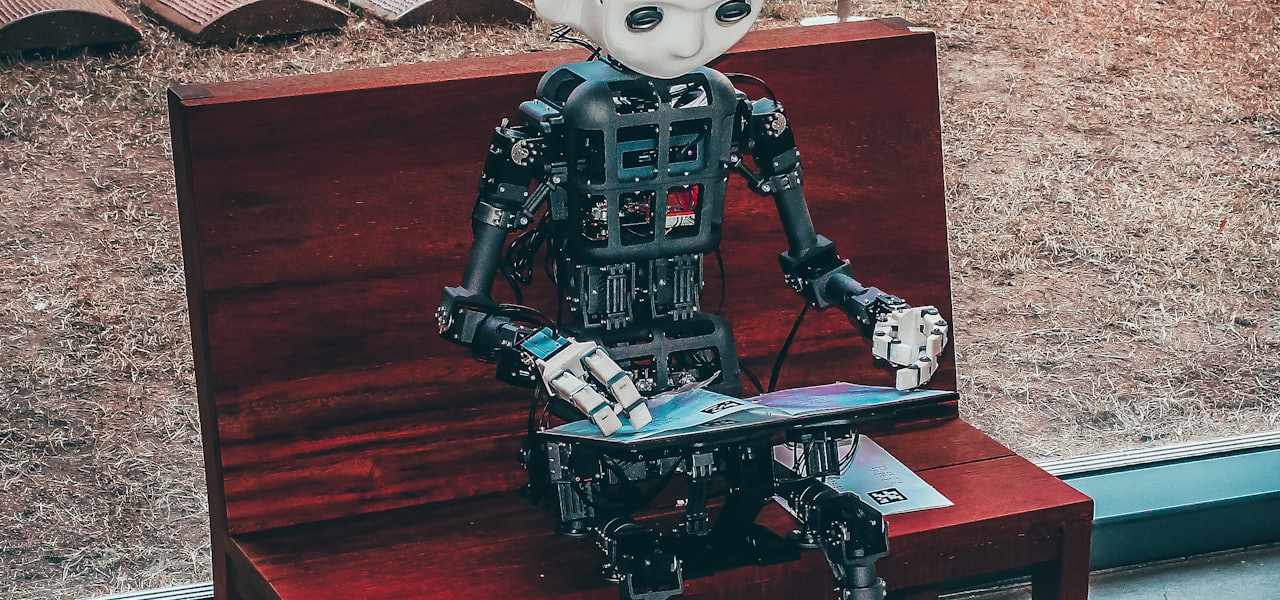
    A synaptic transistor is an electrical device that can learn in ways similar to a neural synapse. It optimizes its own properties for the functions it has carried out in the past. The device mimics the behavior of the property of neurons called spike-timing-dependent plasticity, or STDP. == Structure == Its structure is similar to that of a field effect transistor, where an ionic liquid takes the place of the gate insulating layer between the gate electrode and the conducting channel. That channel is composed of samarium nickelate (SmNiO3, or SNO) rather than the field effect transistor's doped silicon. == Function == A synaptic transistor has a traditional immediate response whose amount of current that passes between the source and drain contacts varies with voltage applied to the gate electrode. It also produces a much slower learned response such that the conductivity of the SNO layer varies in response to the transistor's STDP history, essentially by shuttling oxygen ions between the SNO and the ionic liquid. The analog of strengthening a synapse is to increase the SNO's conductivity, which essentially increases gain. Similarly, weakening a synapse is analogous to decreasing the SNO's conductivity, lowering the gain. The input and output of the synaptic transistor are continuous analog values, rather than digital on-off signals. While the physical structure of the device has the potential to learn from history, it contains no way to bias the transistor to control the memory effect. An external supervisory circuit converts the time delay between input and output into a voltage applied to the ionic liquid that either drives ions into the SNO or removes them. A network of such devices can learn particular responses to "sensory inputs", with those responses being learned through experience rather than explicitly programmed.

    Read more →
  • Memtransistor

    Memtransistor

    The memtransistor (a blend word from Memory Transfer Resistor) is an experimental multi-terminal passive electronic component that might be used in the construction of artificial neural networks. It is a combination of the memristor and transistor technology. This technology is different from the 1T-1R approach since the devices are merged into one single entity. Multiple memristors can be embedded with a single transistor, enabling it to more accurately model a neuron with its multiple synaptic connections. A neural network produced from these would provide hardware-based artificial intelligence with a good foundation. == Applications == These types of devices would allow for a synapse model that could realise a learning rule, by which the synaptic efficacy is altered by voltages applied to the terminals of the device. An example of such a learning rule is spike-timing-dependant-plasticty by which the weight of the synapse, in this case the conductivity, could be modulated based on the timing of pre and post synaptic spikes arriving at each terminal. The advantage of this approach over two terminal memristive devices is that read and write protocols have the possibility to occur simultaneously and distinctly.

    Read more →
  • Buckeye Corpus

    Buckeye Corpus

    The Buckeye Corpus of conversational speech is a speech corpus created by a team of linguists and psychologists at Ohio State University led by Prof. Mark Pitt. It contains high-quality recordings from 40 speakers in Columbus, Ohio conversing freely with an interviewer. The interviewer's voice is heard only faintly in the background of these recordings. The sessions were conducted as Sociolinguistics interviews, and are essentially monologues. The speech has been orthographically transcribed and phonetically labeled. The audio and text files, together with time-aligned phonetic labels, are stored in a format for use with speech analysis software (Xwaves and Wavesurfer). Software for searching the transcription files is also available at the project web site. The corpus is available to researchers in academia and industry. The project was funded by the National Institute on Deafness and Other Communication Disorders and the Office of Research at Ohio State University.

    Read more →
  • Santa Fe Trail problem

    Santa Fe Trail problem

    The Santa Fe Trail problem is a genetic programming exercise in which artificial ants search for food pellets according to a programmed set of instructions. The layout of food pellets in the Santa Fe Trail problem has become a standard for comparing different genetic programming algorithms and solutions. One method for programming and testing algorithms on the Santa Fe Trail problem is by using the NetLogo application. There is at least one case of a student creating a Lego robotic ant to solve the problem.

    Read more →
  • Multispectral pattern recognition

    Multispectral pattern recognition

    Multispectral remote sensing is the collection and analysis of reflected, emitted, or back-scattered energy from an object or an area of interest in multiple bands of regions of the electromagnetic spectrum (Jensen, 2005). Subcategories of multispectral remote sensing include hyperspectral, in which hundreds of bands are collected and analyzed, and ultraspectral remote sensing where many hundreds of bands are used (Logicon, 1997). The main purpose of multispectral imaging is the potential to classify the image using multispectral classification. This is a much faster method of image analysis than is possible by human interpretation. == Multispectral remote sensing systems == Remote sensing systems gather data via instruments typically carried on satellites in orbit around the Earth. The remote sensing scanner detects the energy that radiates from the object or area of interest. This energy is recorded as an analog electrical signal and converted into a digital value though an A-to-D conversion. There are several multispectral remote sensing systems that can be categorized in the following way: === Multispectral imaging using discrete detectors and scanning mirrors === Landsat Multispectral Scanner (MSS) Landsat Thematic Mapper (TM) NOAA Geostationary Operational Environmental Satellite (GOES) NOAA Advanced Very High Resolution Radiometer (AVHRR) NASA and ORBIMAGE, Inc., Sea-viewing Wide field-of-view Sensor (SeaWiFS) Daedalus, Inc., Aircraft Multispectral Scanner (AMS) NASA Airborne Terrestrial Applications Sensor (ATLAS) === Multispectral imaging using linear arrays === SPOT 1, 2, and 3 High Resolution Visible (HRV) sensors and Spot 4 and 5 High Resolution Visible Infrared (HRVIR) and vegetation sensor Indian Remote Sensing System (IRS) Linear Imaging Self-scanning Sensor (LISS) Space Imaging, Inc. (IKONOS) Digital Globe, Inc. (QuickBird) ORBIMAGE, Inc. (OrbView-3) ImageSat International, Inc. (EROS A1) NASA Terra Advanced Spaceborne Thermal Emission and Reflection Radiometer (ASTER) NASA Terra Multiangle Imaging Spectroradiometer (MISR) === Imaging spectrometry using linear and area arrays === NASA Jet Propulsion Laboratory Airborne Visible/Infrared Imaging Spectrometer (AVIRIS) Compact Airborne Spectrographic Imager 3 (CASI 3) NASA Terra Moderate Resolution Imaging Spectrometer (MODIS) NASA Earth Observer (EO-1) Advanced Land Imager (ALI), Hyperion, and LEISA Atmospheric Corrector (LAC) === Satellite analog and digital photographic systems === Russian SPIN-2 TK-350, and KVR-1000 NASA Space Shuttle and International Space Station Imagery == Multispectral classification methods == A variety of methods can be used for the multispectral classification of images: Algorithms based on parametric and nonparametric statistics that use ratio-and interval-scaled data and nonmetric methods that can also incorporate nominal scale data (Duda et al., 2001), Supervised or unsupervised classification logic, Hard or soft (fuzzy) set classification logic to create hard or fuzzy thematic output products, Per-pixel or object-oriented classification logic, and Hybrid approaches == Supervised classification == In this classification method, the identity and location of some of the land-cover types are obtained beforehand from a combination of fieldwork, interpretation of aerial photography, map analysis, and personal experience. The analyst would locate sites that have similar characteristics to the known land-cover types. These areas are known as training sites because the known characteristics of these sites are used to train the classification algorithm for eventual land-cover mapping of the remainder of the image. Multivariate statistical parameters (means, standard deviations, covariance matrices, correlation matrices, etc.) are calculated for each training site. All pixels inside and outside of the training sites are evaluated and allocated to the class with the more similar characteristics. === Classification scheme === The first step in the supervised classification method is to identify the land-cover and land-use classes to be used. Land-cover refers to the type of material present on the site (e.g. water, crops, forest, wet land, asphalt, and concrete). Land-use refers to the modifications made by people to the land cover (e.g. agriculture, commerce, settlement). All classes should be selected and defined carefully to properly classify remotely sensed data into the correct land-use and/or land-cover information. To achieve this purpose, it is necessary to use a classification system that contains taxonomically correct definitions of classes. If a hard classification is desired, the following classes should be used: Mutually exclusive: there is not any taxonomic overlap of any classes (i.e., rain forest and evergreen forest are distinct classes). Exhaustive: all land-covers in the area have been included. Hierarchical: sub-level classes (e.g., single-family residential, multiple-family residential) are created, allowing that these classes can be included in a higher category (e.g., residential). Some examples of hard classification schemes are: American Planning Association Land-Based Classification System United States Geological Survey Land-use/Land-cover Classification System for Use with Remote Sensor Data U.S. Department of the Interior Fish and Wildlife Service U.S. National Vegetation and Classification System International Geosphere-Biosphere Program IGBP Land Cover Classification System === Training sites === Once the classification scheme is adopted, the image analyst may select training sites in the image that are representative of the land-cover or land-use of interest. If the environment where the data was collected is relatively homogeneous, the training data can be used. If different conditions are found in the site, it would not be possible to extend the remote sensing training data to the site. To solve this problem, a geographical stratification should be done during the preliminary stages of the project. All differences should be recorded (e.g. soil type, water turbidity, crop species, etc.). These differences should be recorded on the imagery and the selection training sites made based on the geographical stratification of this data. The final classification map would be a composite of the individual stratum classifications. After the data are organized in different training sites, a measurement vector is created. This vector would contain the brightness values for each pixel in each band in each training class. The mean, standard deviation, variance-covariance matrix, and correlation matrix are calculated from the measurement vectors. Once the statistics from each training site are determined, the most effective bands for each class should be selected. The objective of this discrimination is to eliminate the bands that can provide redundant information. Graphical and statistical methods can be used to achieve this objective. Some of the graphic methods are: Bar graph spectral plots Cospectral mean vector plots Feature space plots Cospectral parallelepiped or ellipse plots === Classification algorithm === The last step in supervised classification is selecting an appropriate algorithm. The choice of a specific algorithm depends on the input data and the desired output. Parametric algorithms are based on the fact that the data is normally distributed. If the data is not normally distributed, nonparametric algorithms should be used. The more common nonparametric algorithms are: One-dimensional density slicing Parallelipiped Minimum distance Nearest-neighbor Expert system analysis Convolutional neural network == Unsupervised classification == Unsupervised classification (also known as clustering) is a method of partitioning remote sensor image data in multispectral feature space and extracting land-cover information. Unsupervised classification require less input information from the analyst compared to supervised classification because clustering does not require training data. This process consists in a series of numerical operations to search for the spectral properties of pixels. From this process, a map with m spectral classes is obtained. Using the map, the analyst tries to assign or transform the spectral classes into thematic information of interest (i.e. forest, agriculture, urban). This process may not be easy because some spectral clusters represent mixed classes of surface materials and may not be useful. The analyst has to understand the spectral characteristics of the terrain to be able to label clusters as a specific information class. There are hundreds of clustering algorithms. Two of the most conceptually simple algorithms are the chain method and the ISODATA method. === Chain method === The algorithm used in this method operates in a two-pass mode (it passes through the multispectral dataset two times. In the first pass, the program reads through the dataset and sequentially builds clusters (groups of p

    Read more →